
Introduction
A ship’s main engine is a massive machine that operates continuously under high pressure and temperature. For such machinery to run reliably, the fuel oil and lubricating oil supplied must be clean and free of contaminants. Unfortunately, the oils delivered to a vessel are far from perfect. Fuel oils, especially heavy fuel oil (HFO), often contain water, dirt, and cat fines (hard abrasive particles). Similarly, lube oil gradually becomes contaminated with water, soot, oxidation products, and metal wear particles.
If left unpurified, these impurities can cause catastrophic engine damage. That is why onboard ships, engineers dedicate considerable time to purification and treatment of fuel and lubricating oils.
Why Fuel Oil Purification is Necessary
• Cat Fines Damage: Aluminium and silicon particles (cat fines) in HFO can score and wear down cylinder liners and piston rings.
• Water Contamination: Leads to poor combustion, corrosion, and microbial growth.
• Incomplete Combustion: Dirty fuel creates deposits on injectors and exhaust valves, reducing efficiency.
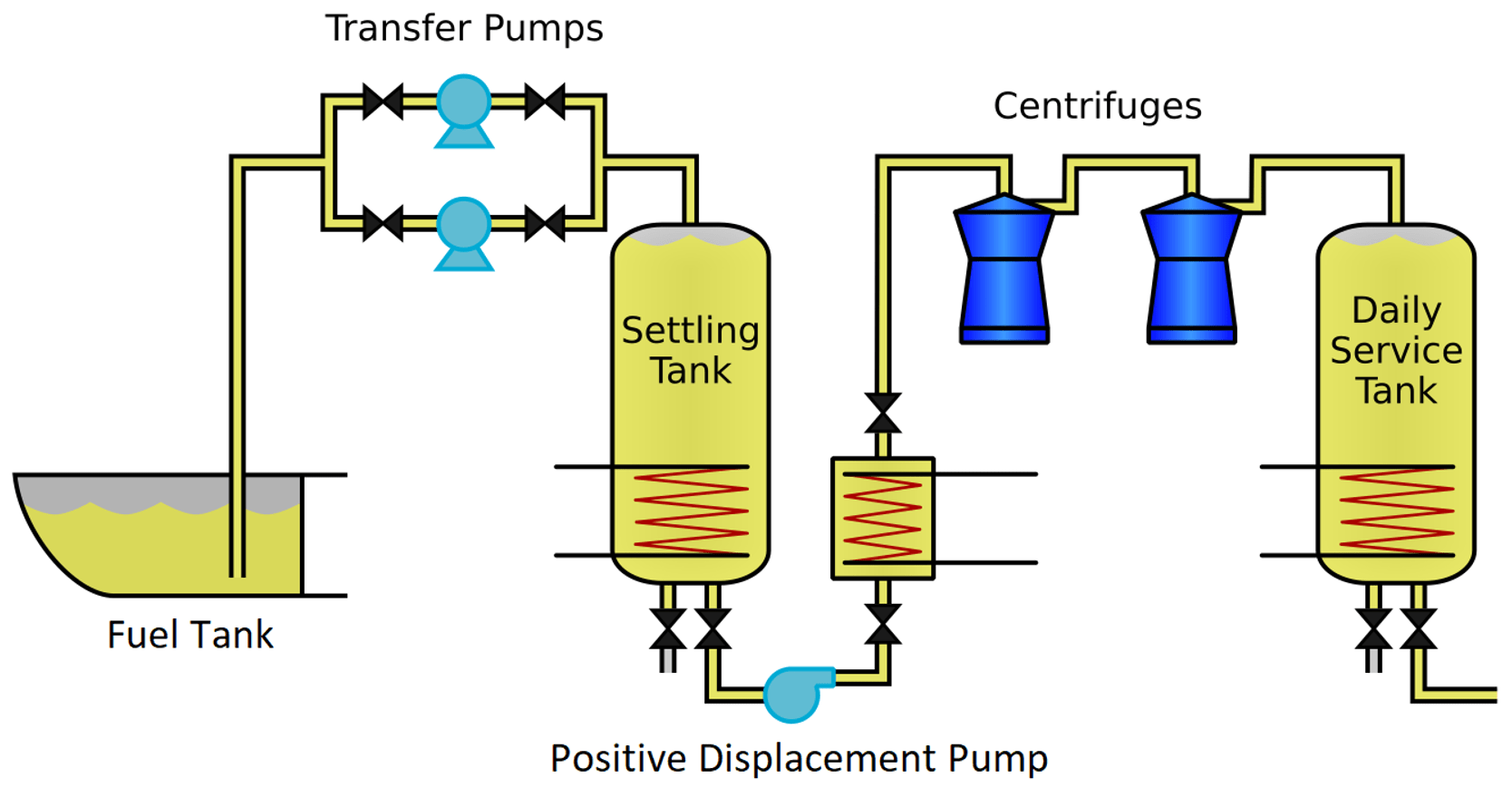
How Fuel Oil Purification is Done
1. Settling Tanks
• Fuel is first stored in settling tanks, where gravity allows heavier sludge and water to settle at the bottom.
• Regular draining of these tanks is an engineer’s routine duty.
2. Centrifugal Purifiers
• The real purification happens in centrifugal separators.
• Operating at speeds of 7,000–10,000 rpm, they create a strong centrifugal force that separates oil, water, and sludge into distinct layers.
• Two main operating modes:
• Purifier mode – Removes both solids and water.
• Clarifier mode – Removes mainly solids.
3. Daily Service Tanks
• Only after passing through purifiers does the clean fuel reach the daily service tank, from where it is supplied to the engine.
Why Lube Oil Purification is Necessary
Lubricating oil is the blood of the engine. It provides lubrication, cooling, sealing, and cleaning functions. However, over time, it picks up:
• Water contamination (from leaks in coolers or condensation).
• Carbon particles (from combustion blow-by).
• Metallic wear debris (from bearings and liners).
If not purified, this leads to:
• Bearing failures.
• Increased wear of moving parts.
• Loss of oil properties such as viscosity and alkalinity.
Lube Oil Purification Methods
1. Centrifugal Purification – Just like with fuel oil, separators are used to continuously remove water and solids.
2. Filters – Fine filters catch small particles before oil circulates back into the engine.
3. Regular Sampling & Testing – Engineers test for Total Base Number (TBN), viscosity, and water content to decide when oil should be replaced or reconditioned.
Maintenance and Best Practices
• Keep purifiers properly balanced and maintained.
• Ensure correct operating temperature (usually 98–105°C for fuel oil) for efficient separation.
• Drain sludge regularly to avoid purifier choking.
• Carry out lube oil analysis as per planned maintenance schedules.
Conclusion
Fuel and lube oil purification may seem like routine tasks for ship engineers, but they are among the most critical safeguards for the ship’s main engine. A well-maintained purification system ensures reliable operation, lower maintenance costs, and longer machinery life. In the unforgiving marine environment, the difference between a smooth voyage and an expensive breakdown often lies in how well the ship’s oils are purified.